Front view
SHS flat sided oval steel tube
1.5" x 3.5" x 5.25";
weight = 3 lbs.
or 38mm x 89mm x 133mm
weight = 1.66kg
Padlock Security 1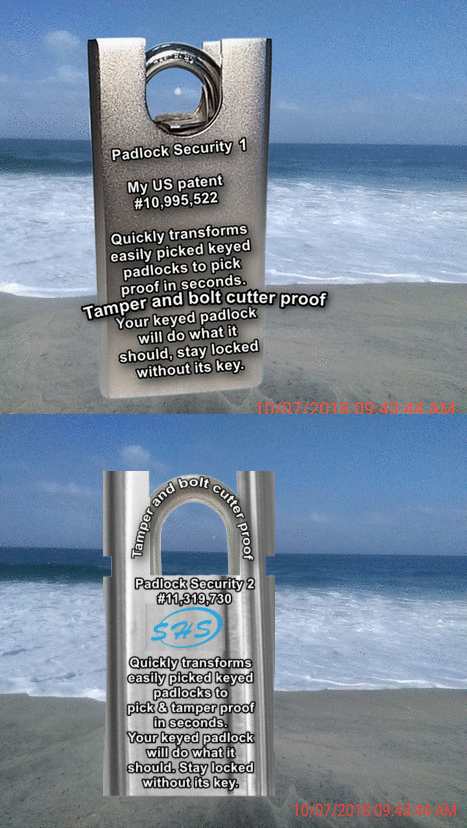
US Patent #10,995,522
Flat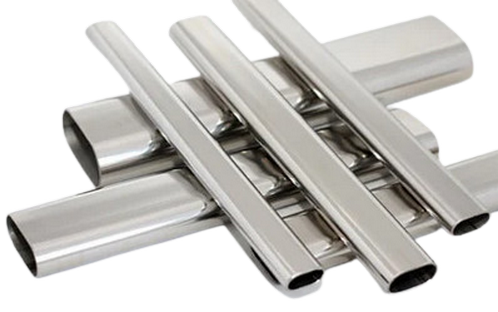 -sided oval steel tubes
constructed to enclose an
easily picked keyed padlock
makes a padlock pick-proof.
Click on Padlock Security 3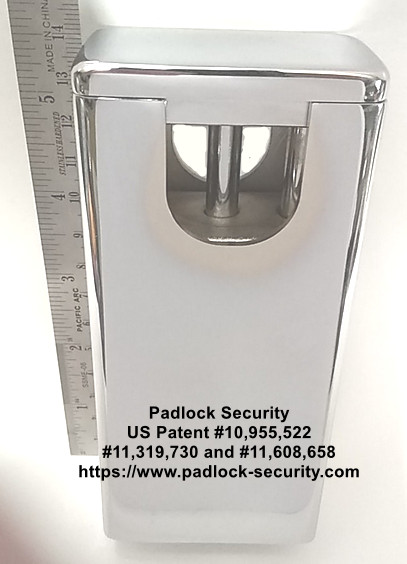 to view the first ever triple shackle pick-proof padlock.
A thick
steel top plate prevents bolt cutter access to shackles.
to view the first ever triple shackle pick-proof padlock.
A thick
steel top plate prevents bolt cutter access to shackles.
I sent an email to LPL and a Tweet to Lock Noob 03/15&21/2023 asking if I can send each a Padlock security prototype to see if they can pick it open.
No reply from either.
Padlock Security Chrome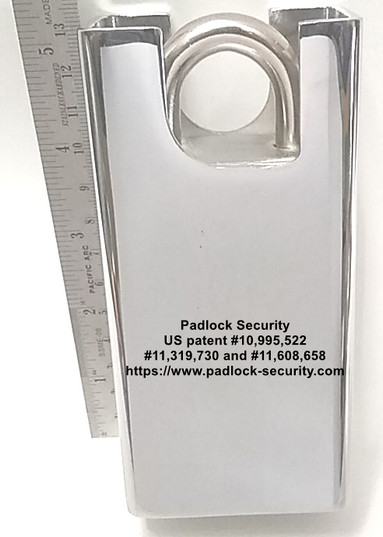
US Patent #10,995,522
Flat
-sided oval steel tubesconstructed to enclose an
easily picked keyed padlock
makes a padlock pick-proof.
Click on Padlock Security 3
to view the first ever triple shackle pick-proof padlock.
A thick
steel top plate prevents bolt cutter access to shackles.
I sent an email to LPL and a Tweet to Lock Noob 03/15&21/2023 asking if I can send each a Padlock security prototype to see if they can pick it open.
No reply from either.
Padlock Security Chrome
Nine popup image links below work using Firefox not with Chrome!
Please send an email on how to fix.
Padlock - Security
US Patent #10,995,522 - issue date 05/04/2021
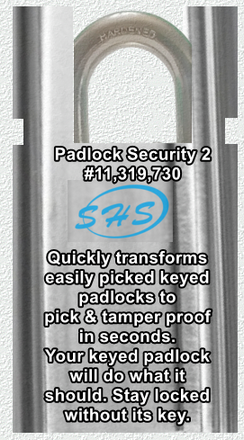
US Patent #11,319,730 - issue date 05/03/2022
US Patent #11,608,658 - issue date 03/21/2023
A keyed padlock is meant to protect possessions, stay locked and not be easily picked open or cut off in seconds. Thanks to LockPickingLawyer and his 4.46 million subscribers' laughing comments on how easily and quickly a keyed padlock can be picked open as I did in July of 2019. It appears keyed padlock makers are clueless on how to block their visual deterrent-only keyed padlocks from being picked opened in seconds.
Most if not all easily picked keyed padlocks are inexpensive relative to what they are made to protect, nice to look at and some even come in your choice of colors and do nothing to protect your belongings from a lock pick.
Current padlock technology is obsolete and useless when so-called high security-rated keyed padlocks can be picked and opened in seconds.
Hundreds of years from now people will look back at this planet's first pick, tamper and bolt cutter-proof keyed Padlock Security.
A wall around a home protects those living inside. A prison uses walls to prevent those inside from escaping. Most countries, though not all, use walls or gates to stop others from easy entry.
Padlock Security patent uses a thick steel wall barrier having an offset 90-degree key slot and a Neodymium magnet washer preventing
lock- picking tools from easily being inserted into a padlock's key slot for picking.
Left-click blue word(s) to view the online link or mouse over the red word(s) popup image.
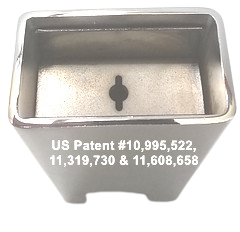
Bottom view of 90-degree key slot offset to padlock key slot a few inches or more further up from bottom edges of outer steel tube.
A hidden from view padlock, key slot or shackle makes for a pick-proof padlock.
It might take a minute or two to learn how to insert your key to unlock and when locked and without your key Padlock-Security is pick and tamper- proof.
Claims include a Neodymium ring/washer-shaped magnet to attract lock picks or hairpin picking.
Openings on the front, back and sides provide a DIY option to secure Padlock Security to a chain/cable and then to a nearby heavy steel bracket secured to a really strong fixture.
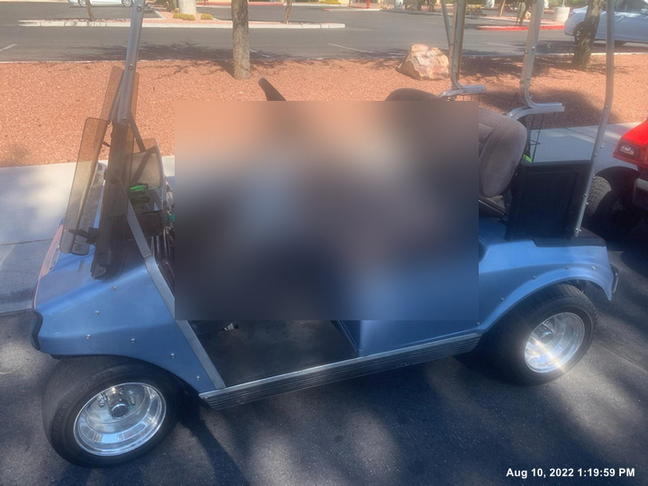
Padlock Security patent is pick and tamper proof and easily locks cell phones, electric/or not bikes, firearms, golf carts, laptops, semi truck/trailers, steering wheels and more.
Below LockPickingLawyer 07/04/2023 video shows how keyed padlock manufacturers help lock pickers by showing their brand name on each keyed padlock allowing pickers to practice or watch easy picking videos.
See more at JUSTIA Patent

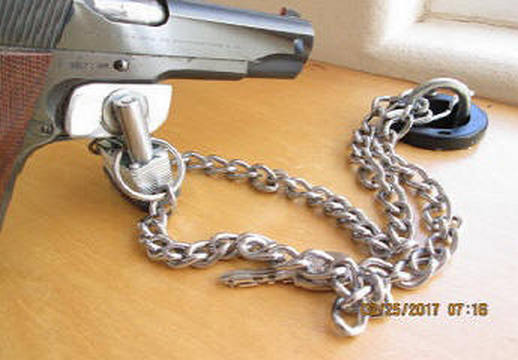
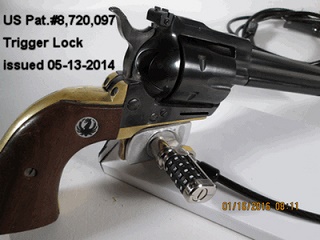
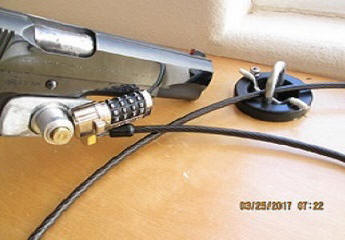 secured to a Colt 45 using my
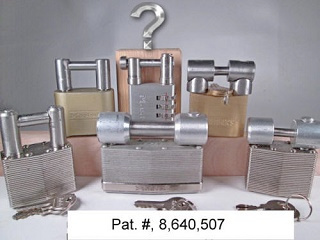
easily picked US Patent #8,720,097 and US patent #8,640,507.
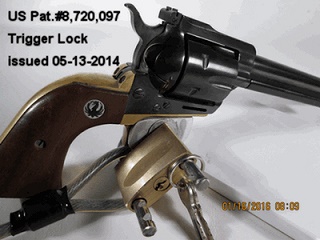
secured to a Colt 45 using my
easily picked US Patent #8,720,097 and US patent #8,640,507.
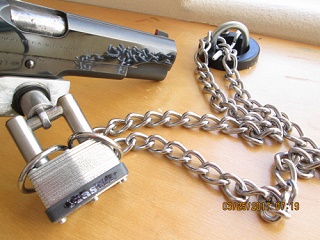 System and Method with US Patent #8,720,097 Trigger lock using an
easily picked cable locking device or like.
System and Method with US Patent #8,720,097 Trigger lock using an
easily picked cable locking device or like.
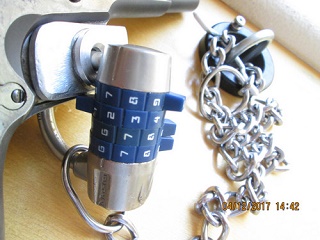
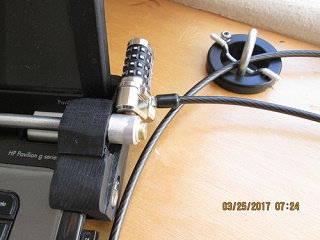 using my US patent#8,640,510 Interface Member For
Lock System and Method and a Clicksafe or like all being easily picked.
using my US patent#8,640,510 Interface Member For
Lock System and Method and a Clicksafe or like all being easily picked.
 using laptop computer lock using US patent#8,720,097 Trigger Lock.
 with cable or chain and US patent#8,720,097 Trigger Lock.
 with cable or chain using US patent#8,720,097 Trigger Lock.
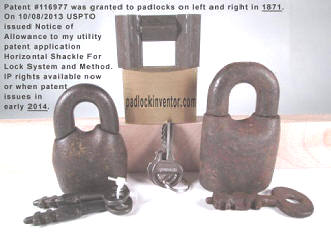 many years before LockPickingLawyer site was created on Youtube.com.
 Padlock.